
ALMEC's Know-How
At the core of our expertise is mastery of on-board electronics. We design embedded control systems, master and slave control units, wired and wireless keypads and HMI panels, all based on CANbus architecture, the standard for special vehicles. Every solution is designed to operate in urban environments with stringent requirements for reliability, durability and functional safety.
Added to this foundation is the ability to connect the vehicle to the outside world. ALMEC modems integrate CAN telemetry, data collection, weighing and cloud transmission in a single coherent architecture, making fleets visible in real time: vehicle status, remote diagnostics, service quality and operational traceability.
In recent years we have extended our know-how toward advanced technologies: dynamic route optimization adapts collection to traffic and unexpected events, reducing kilometers and emissions.
The result is expertise that is not limited to a single product, but encompasses the entire ecosystem: hardware, software, IoT, artificial intelligence and the experience of those who have been operating in the sector for years.
Diaboard – Digital IoT Platform
A waste collection vehicle continuously generates data: position, actuator status, work cycles, anomalies, weighings. Until a few years ago this data remained on the vehicle, inaccessible or difficult to read. Diaboard was created to transform every vehicle into a connected node, capable of communicating in real time with service managers through the NEXUS IoT Gateway.
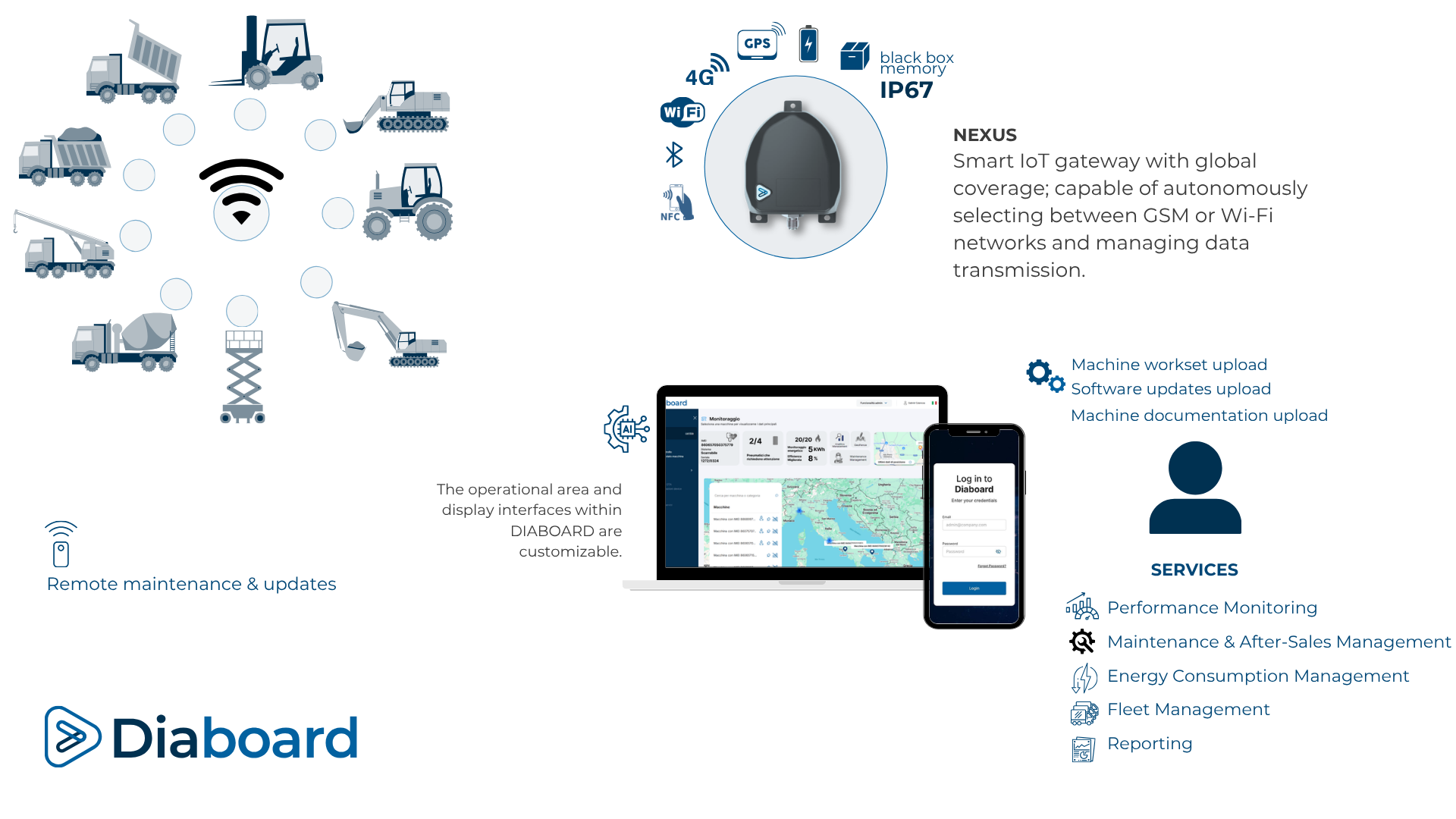 The platform is based on an integrated architecture that collects data directly from the vehicle's control unit, structures it and sends it to the cloud in a precise and scalable way, transforming it into immediately usable operational information: real-time fleet status, predictive diagnostics, service quality measured for each individual operation and complete traceability of every collection.
The platform scales with the fleet: management extends across hundreds of vehicles distributed across multiple territories.
Beyond the Vehicle: Smart Infrastructure for Waste Collection
ALMEC extends its solutions beyond on-board electronics, making the entire infrastructure intelligent, from containers to route planning.
One example of infrastructure: ALMEC smart bins are equipped with sensors that continuously monitor the fill level, internal temperature, frequency of use and geographic position of each container, also allowing a dynamic map of the territory to be displayed showing in real time where intervention is needed.
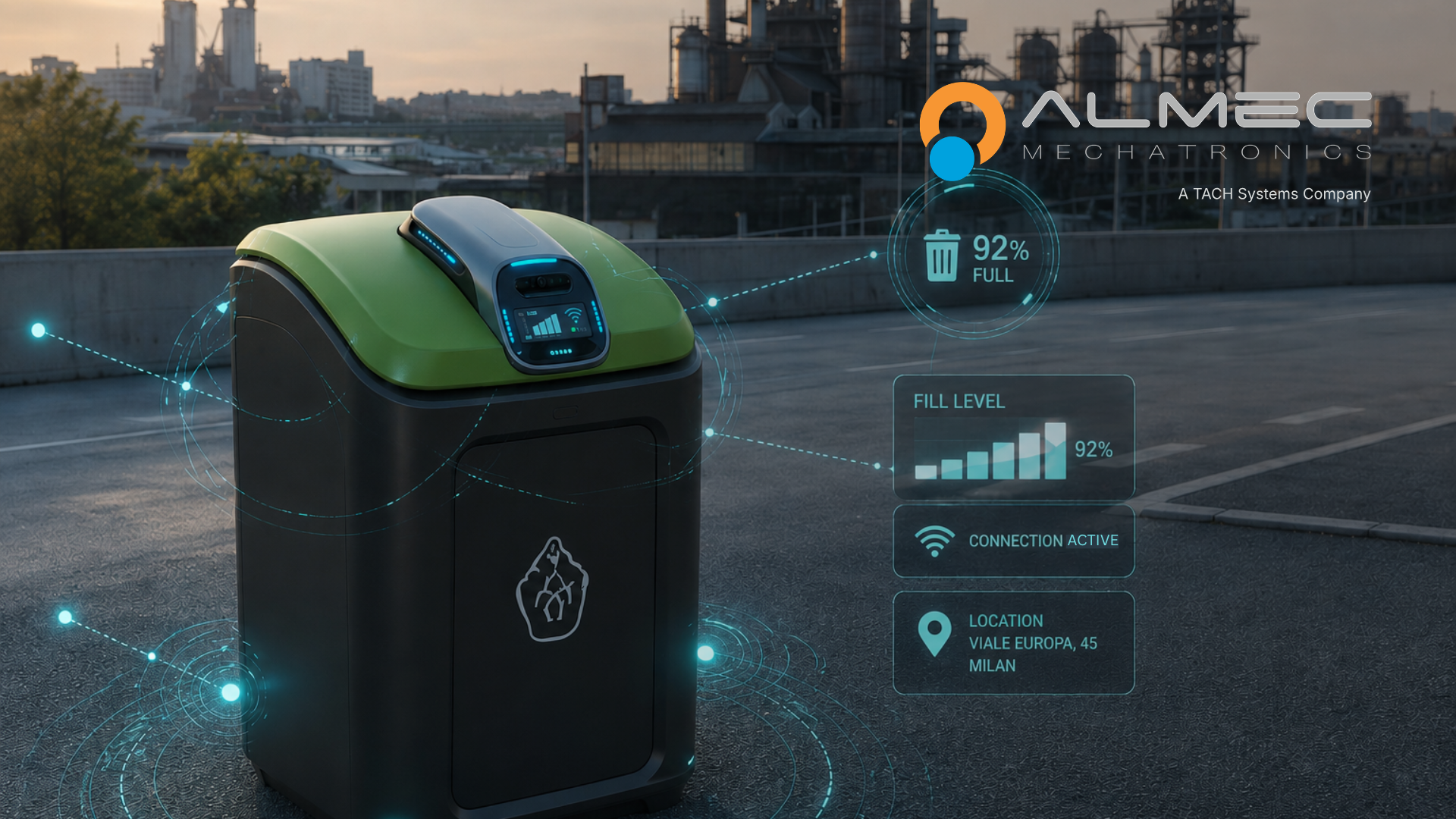 This data feeds route optimization: routes planned based on the actual status of the containers, adapted to traffic and unexpected events in real time. Vehicles go out when needed, go where needed, taking the most efficient route. The result is measurable: fewer kilometers, fewer emissions, more punctual service.
Vehicle Types in Waste Management
Diaboard supports any type of vehicle in the urban fleet:
Waste collection trucks
Road sweepers
Sewer and drainage vehicles
Snowplows and salt spreaders
Multi-service vehicles
Road maintenance
Smart infrastructure
Intelligent bins and advanced sensors
Years of support for waste vehicle manufacturers in europe and worldwide
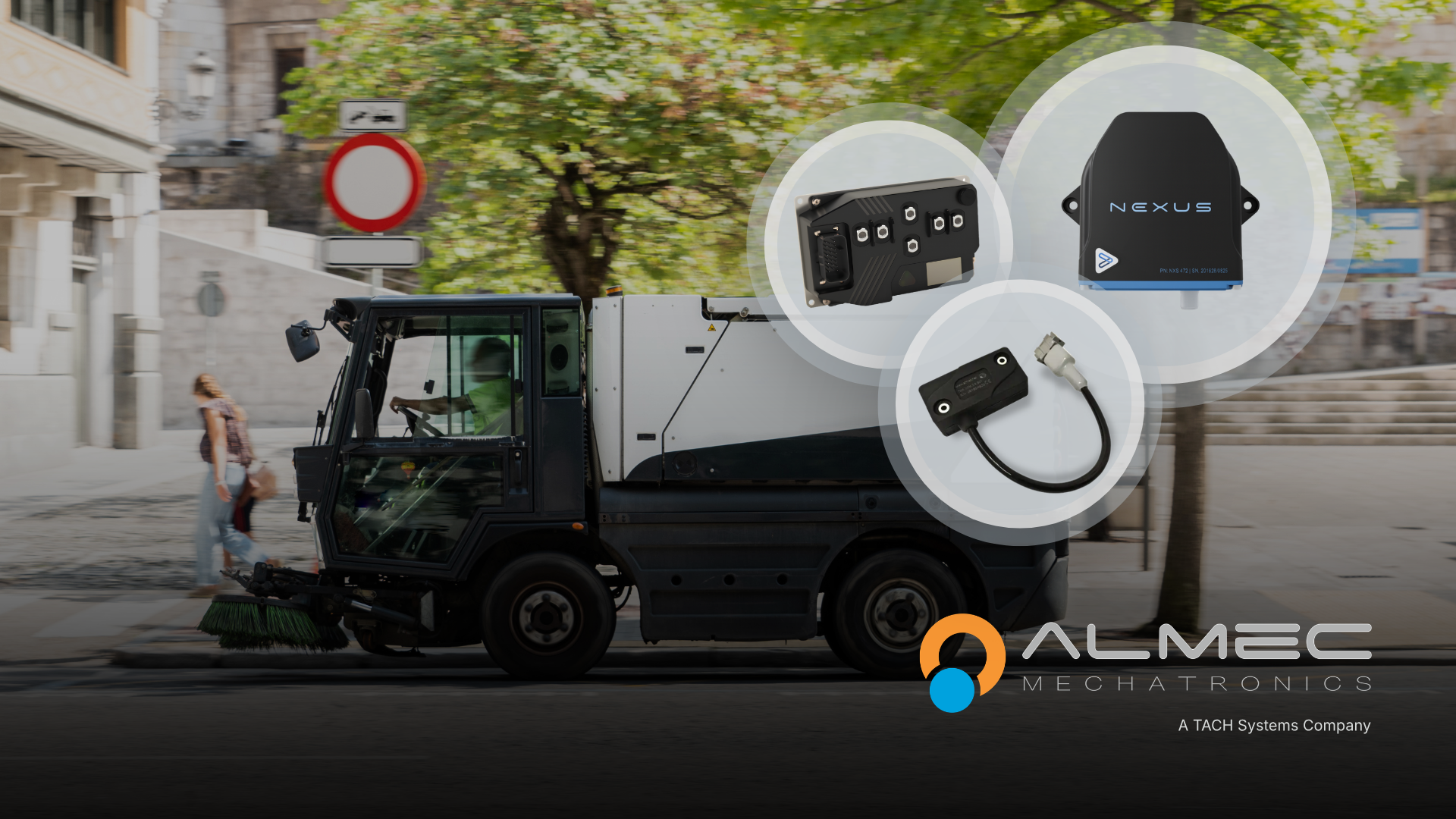
ALMEC has been collaborating for many years with the leading OEM manufacturers of urban hygiene vehicles, waste collection trucks, road sweepers, sewer vehicles and special municipal vehicles, bringing its on-board electronics to fleets distributed across Europe and the world.
We work alongside manufacturers from concept to finished product, with systems designed to be integrated directly into production, customized to each customer's technical specifications and supported over time with dedicated assistance and firmware updates.
The trust our partners place in ALMEC grows over time, project by project.
Modularity is the key advantage of the ALMEC system: every vehicle configuration finds its own solution, built to measure.
ALMEC Products for Waste Management
The ALMEC range for waste collection is the result of years of development in close contact with vehicle manufacturers and service operators. Each product is designed to meet a specific need and together they form an integrated system.
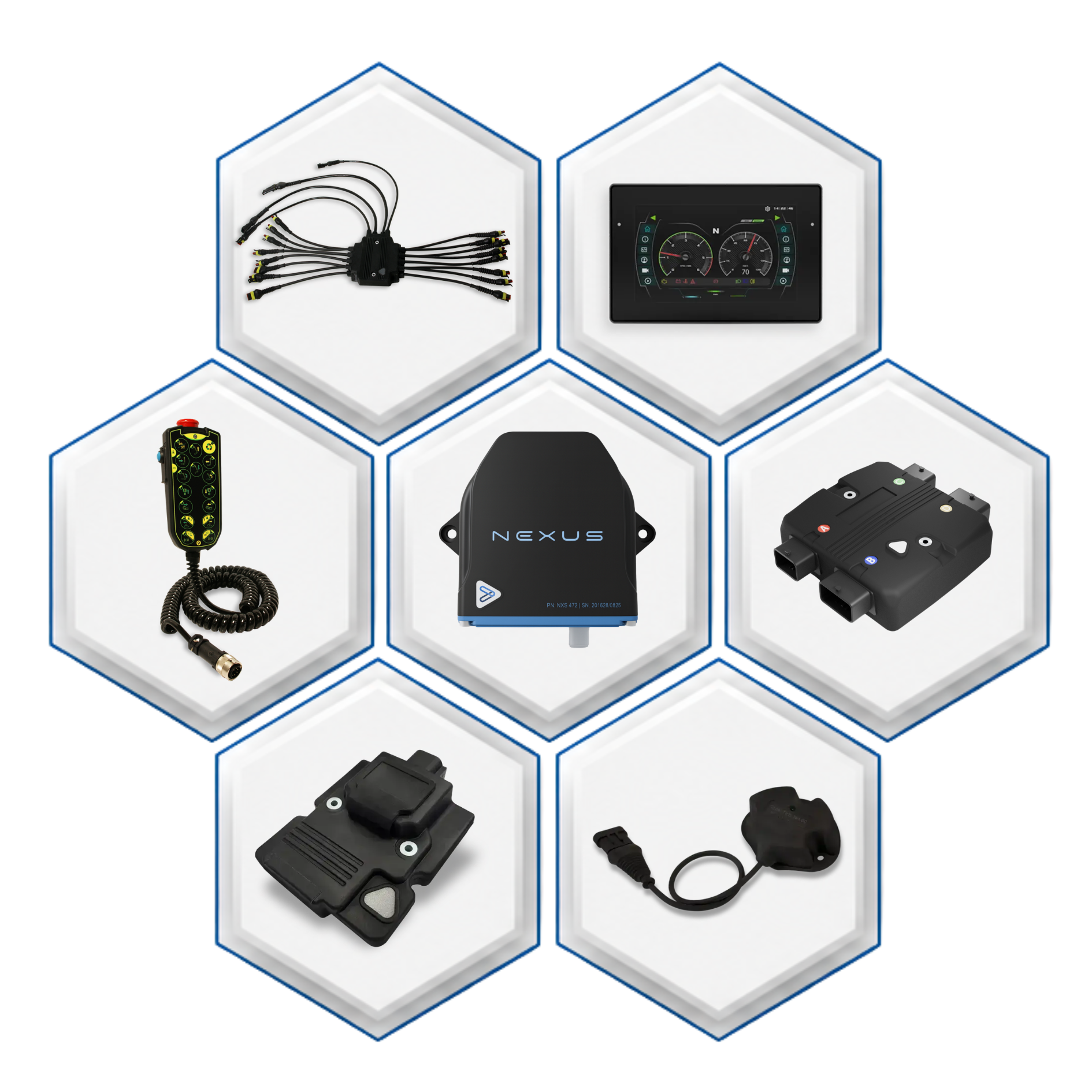
Master Electronic Control Units – SPN4, SPN5, SPN6
These are the brain of the system. They manage and coordinate all vehicle functions: they receive commands from the operator, process them and translate them into precise actions on the actuators. The most recent versions guarantee greater processing capacity and faster response times, to maintain full control even in the most complex operations.
Slave Control Units – SPN1, SPN2, SPN3
They work in tandem with the master control unit managing specific functions: lifting arms, compaction mechanisms, hydraulic accessories. The modular master-slave architecture allows the system to be configured precisely to the needs of each vehicle, with the SPN3 as the flagship product of the range.
Wired Keypad – ALNW and ALNW.J
The direct field control tool. Connected via cable to the master control unit, it allows the operator to manage all operational functions precisely — loading, unloading, compaction — with immediate and reliable response even in the most demanding working conditions.
Radio Remote Control Keypad – ALNWR
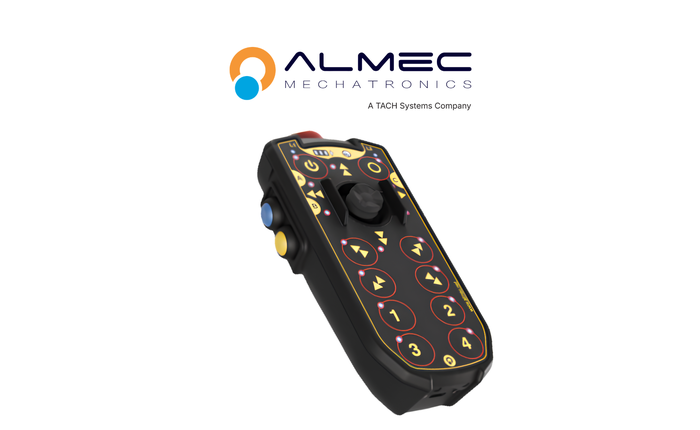
The wireless version of the keypad, which has changed the way of working on the vehicle. The operator can control the vehicle remotely, positioning themselves safely during maneuvers. Less risk, less downtime, greater operational efficiency.
Radio Remote Control Receiver Unit – RDC EVO
The component that closes the wireless circuit: it receives signals from the ALNWR keypad and transmits them reliably to the master control unit. Designed to guarantee connection stability even in complex urban environments, where interference and physical obstacles can compromise signal quality.
Operator Panels – MVS.B3E / MVS.B4E
The HMI interface on board the vehicle. High-resolution display, real-time diagnostics, access to historical data. The operator has the status of the entire system under control at all times, with the ability to intervene quickly in case of anomalies.
Safety Angular Sensor – TRS.184
Oversees safety during the most critical phases: it detects the angle and movement of the lifting arm, blocking dangerous or unauthorized movements. A silent but essential component that helps protect field operators every day.
Servitization: From Product Supply to Service Creation
The electronics and data that ALMEC brings to vehicles are not just operational tools: they are the foundation for building value-added digital services.
Data collected from fleets, bins and collection operations can feed CRM systems for service customer management, reporting platforms for public clients, consumption-based billing tools based on actual weighings, control dashboards for fleet managers and predictive maintenance systems. ALMEC technology thus becomes the engine of a new business model, in which value does not end with the sale of the product but extends over time through continuous, measurable and scalable services.
Cybersecurity and Regulatory Compliance
The growing connectivity of vehicles and urban hygiene infrastructure brings with it new responsibilities in terms of cybersecurity.
The NIS2 directive requires waste management companies to adopt structured cybersecurity measures, in response to the growing digitalization of the sector (connected fleets, IoT sensors, tracking platforms).
The main measures required include: security governance with defined roles and responsibilities, access management, continuous monitoring, digital supply chain protection, incident response plans and the obligation of timely reporting. The ultimate goal is to ensure operational continuity and data integrity, preventing attacks that could compromise waste collection, facilities or regulatory traceability.
Operator Safety
Those who work on waste collection vehicles operate every day in high-risk conditions: chaotic urban environments, maneuvers in tight spaces, moving vehicles. Operator safety is a fundamental criterion from the earliest stages of development.
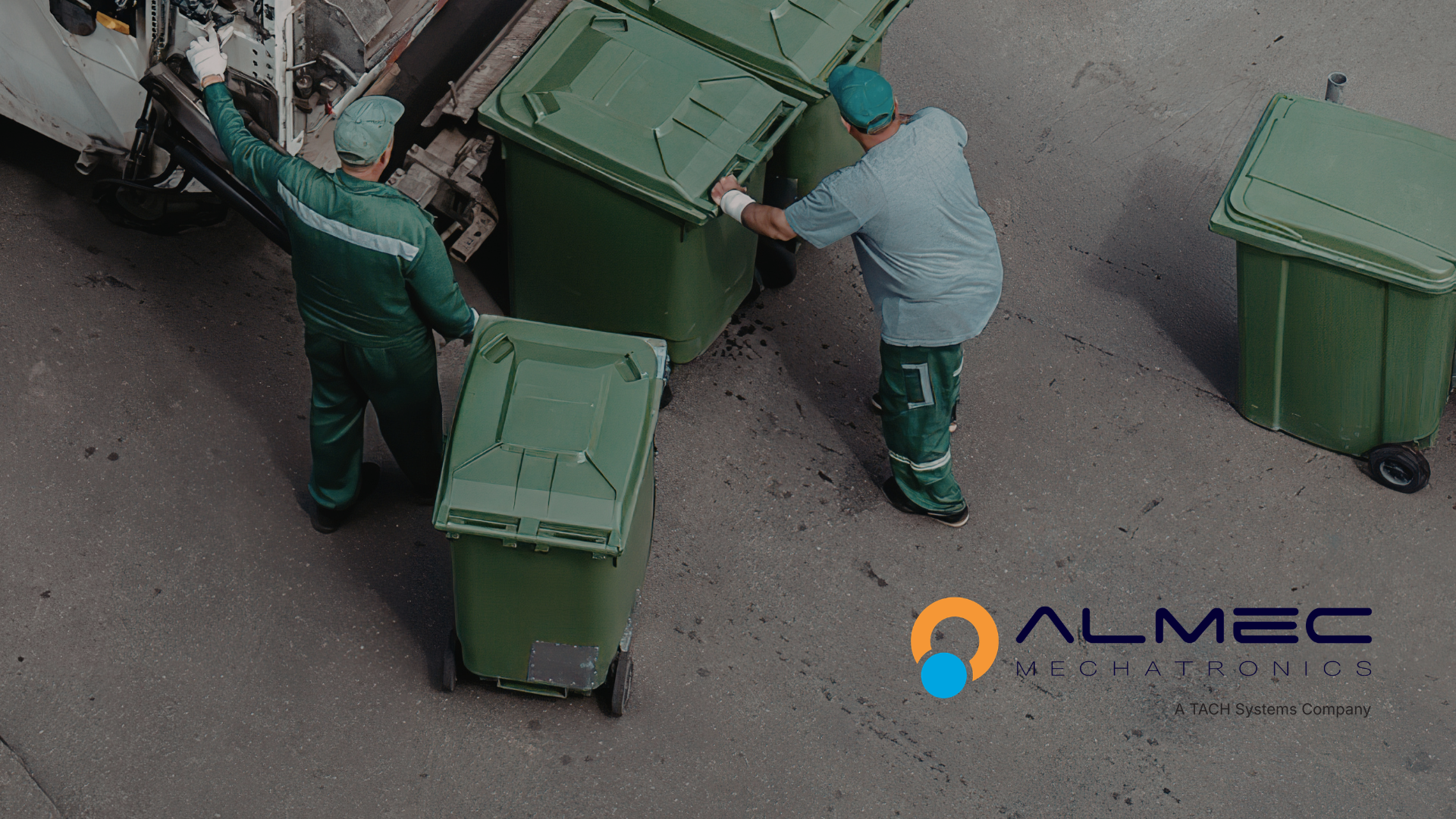 Our systems — from the wireless remote control that allows the operator to move away from the vehicle during maneuvers, to the angular sensor that automatically blocks dangerous movements — are designed to reduce risk in the field, making every operation more controlled and predictable.
Want to Learn More?
Scroll through the complete technical presentation below to discover in detail the full range of ALMEC products and solutions for waste management.
For information, commercial inquiries or technical support, write to info@almec.net — the ALMEC team is at your disposal.