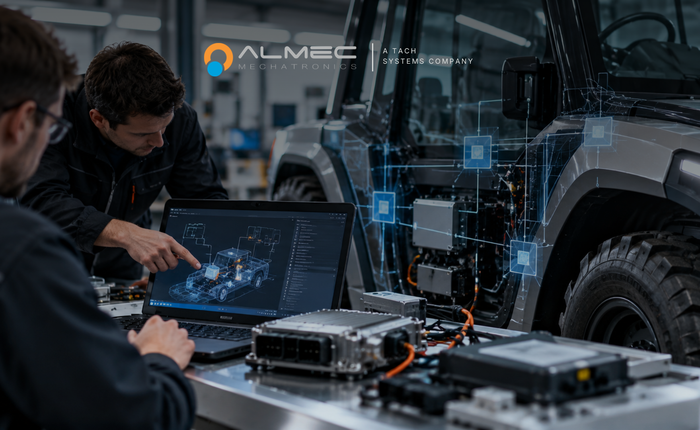

The real challenge when installing an electric motor is ensuring precise steering, activating equipment at the right moment and responding to every operator command. Between the battery and the movement lie drives, signals, software and interfaces that need to speak the same language. Onboard electronics make the difference, turning available energy into controlled, coordinated functions tailored to the application. For OEMs and machine manufacturers, the key question is how to design machine control alongside the functions to be electrified. ALMEC supports this process through a co-design approach, bringing together motor controllers, electronic control units, HMIs and onboard IoT connectivity.
Why electrification changes the design process
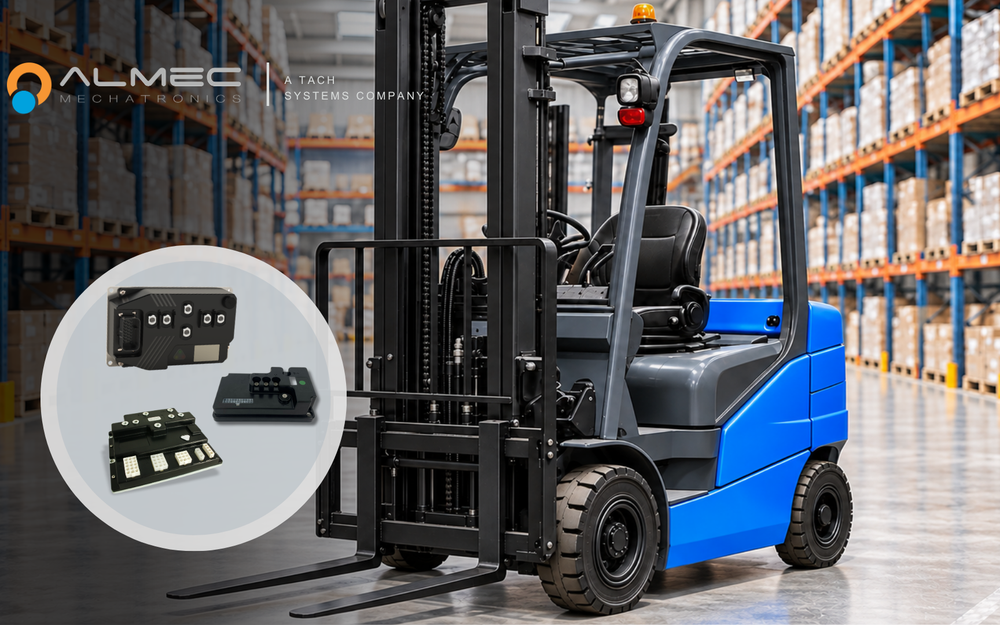
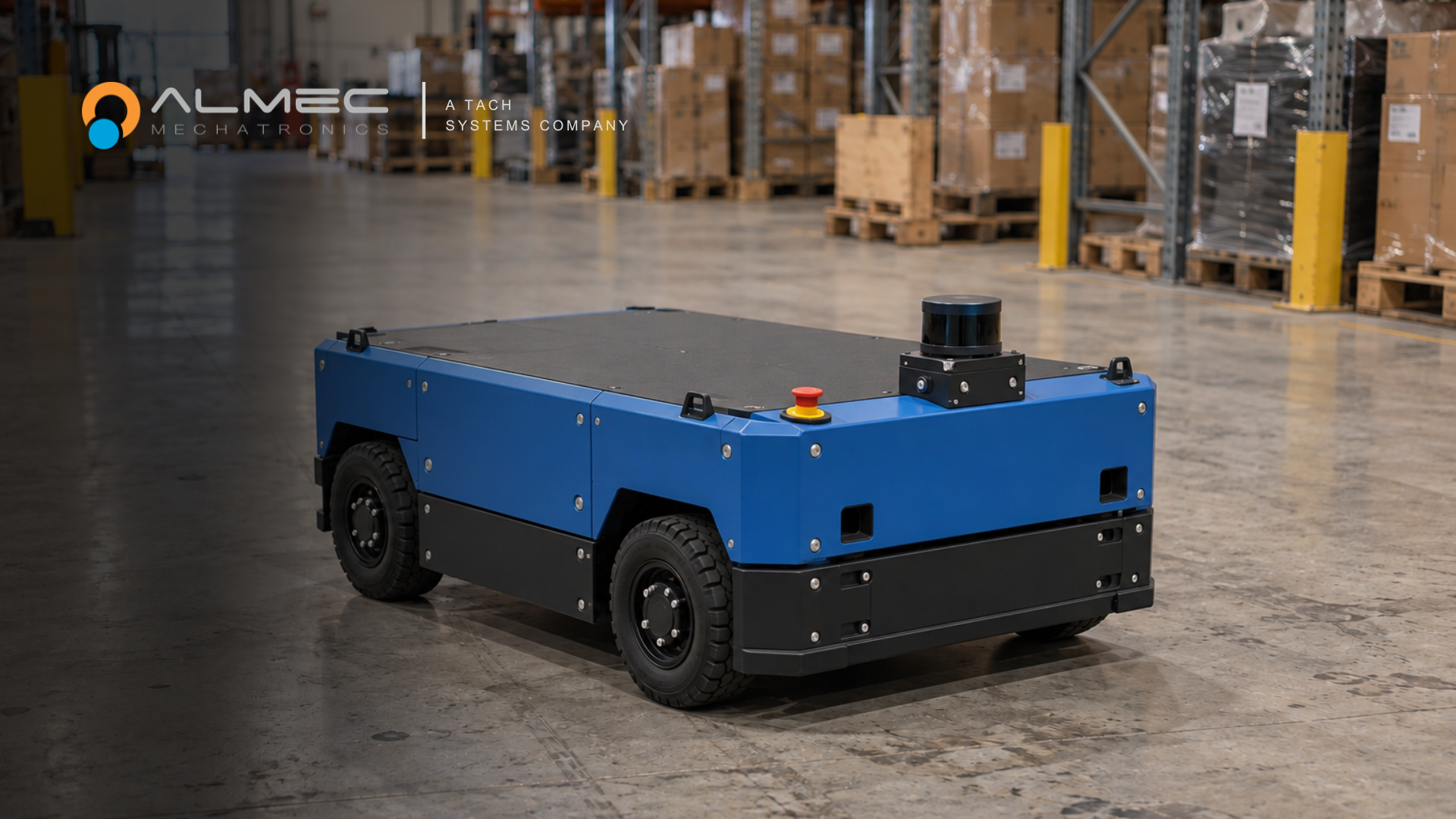 In logistics, electric drives open up new possibilities for motion control and operation in environments where noise and emissions matter. A fully battery-electric machine produces no exhaust emissions: a practical advantage indoors and in urban areas.
The effectiveness of electrification is measured against the actual duty cycle: loads, operating times, energy availability and charging opportunities. The drive is selected together with the control system, defining how each function should behave under real operating conditions.
Motor controllers: where motion begins
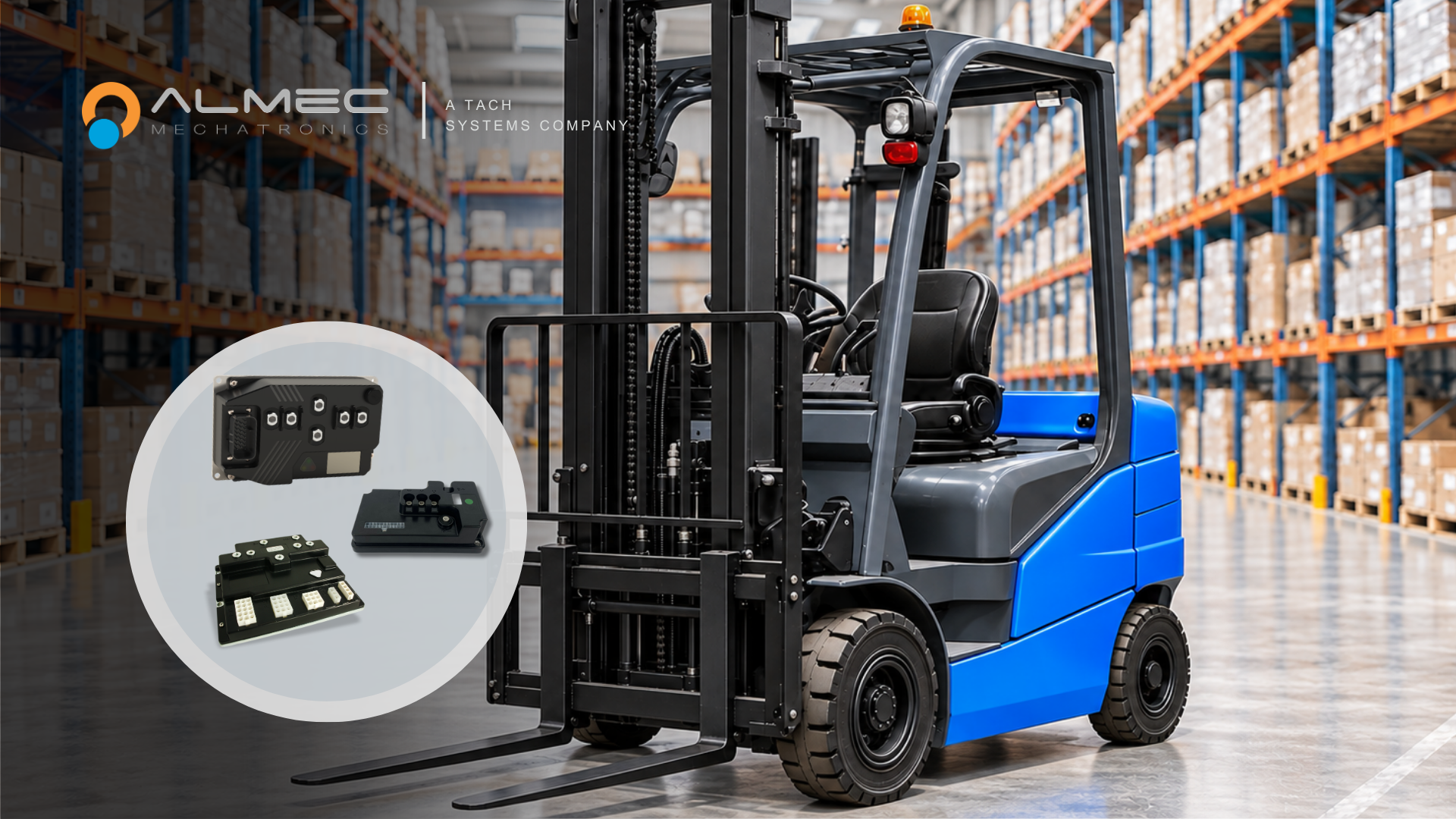 The DC motor controller is where a command becomes movement.
The ALMEC range addresses different requirements:
SPLIFT: designed for dual DC motor systems, with two proportional power channels for traction and steering. The CAN SLAVE version is controlled via the CAN bus network.
SPLIFT-NEXT: developed for machines with a CAN bus network, with two proportional channels for traction and steering. It features a 20–30 VDC power supply and a rated power of 500 W per channel.
SPLIFT-M: designed for brushless motors, with vector control of speed and torque. It supports a 24–48 VDC battery voltage, CAN bus communication and customisable software for applications such as AGVs, pallet trucks and electric cargo vehicles.
ECUs: coordinating machine functions
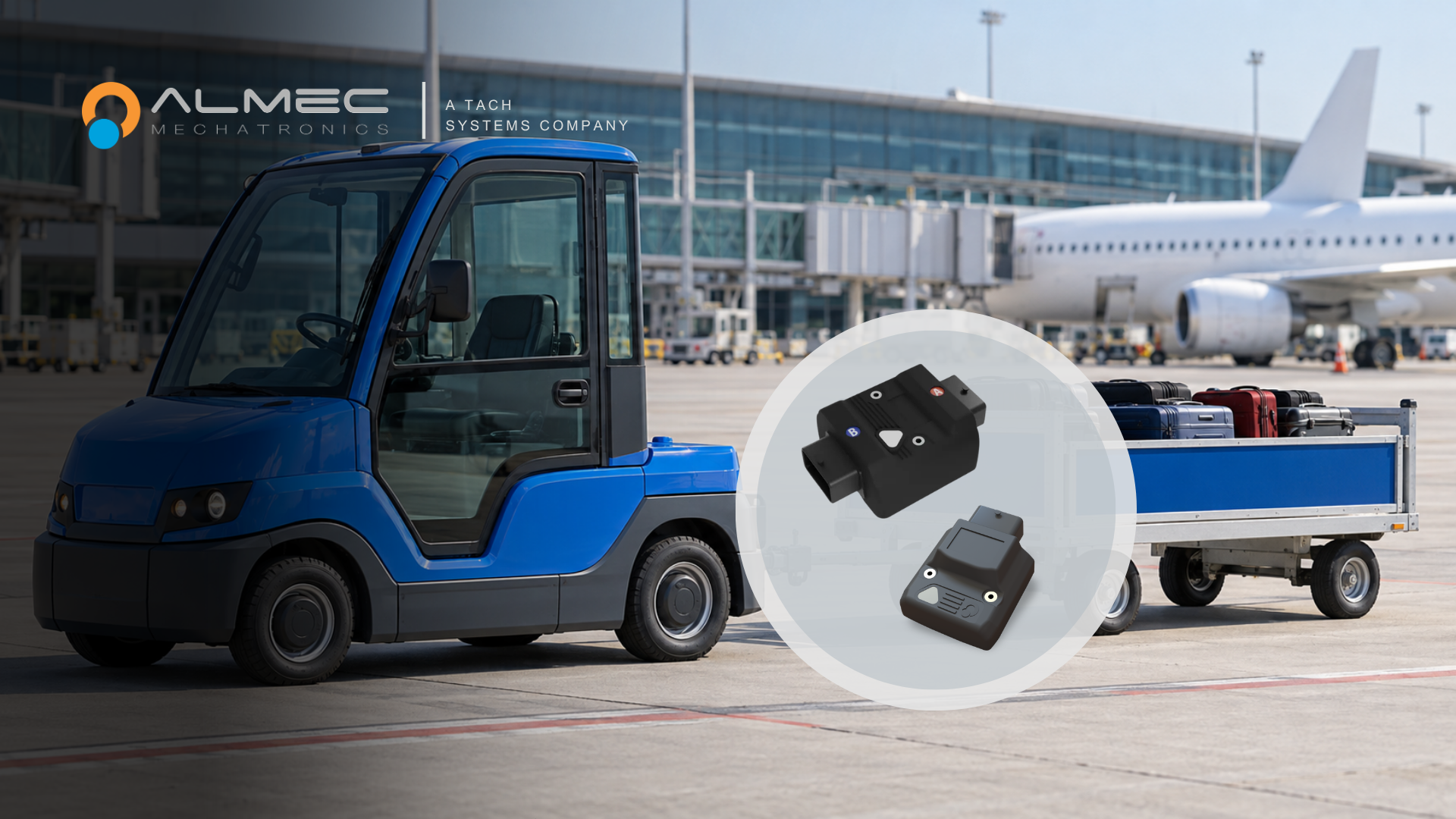
A motor needs to operate within the broader machine logic. Operator commands, sensor signals, enabling conditions and operating states must be processed to determine which functions to activate and in what sequence.
ALMEC’s electronic control units include:
SPN5M-ST: handles up to 16 inputs and 16 outputs and operates on a CAN network as either a master or a slave.
SPN6M-ST: supports applications with more signals, offering up to 32 inputs and 32 outputs.
A practical example is a compact vehicle that needs to coordinate forward motion with equipment activation. The ECU software can process the required commands and enabling conditions, then send requests to the relevant devices.
HMIs: operator panels
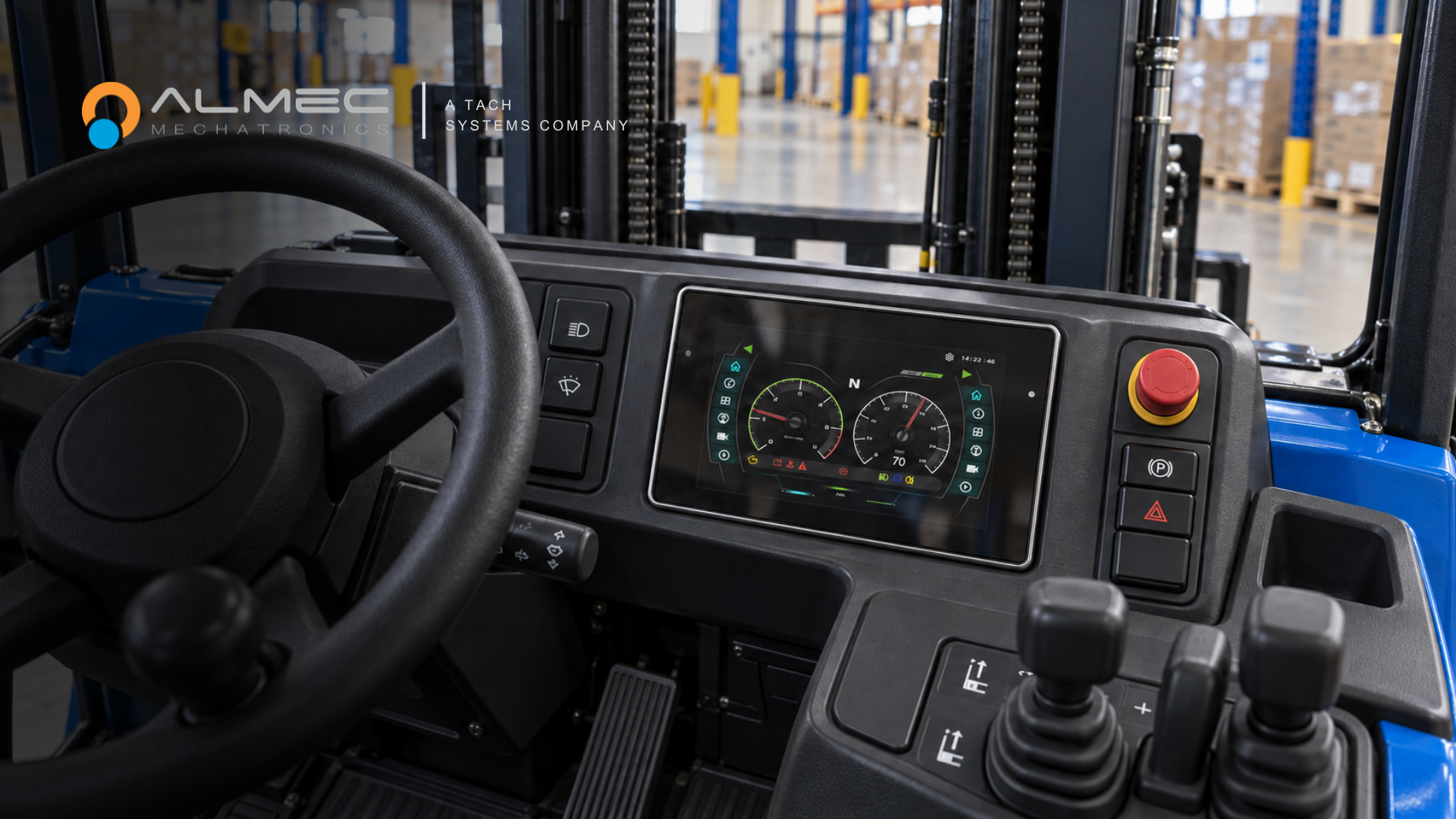
The active operating mode, available functions and notifications provide the information operators need to understand what the machine is doing and how to respond.
ALMEC interfaces such as MVS.B feature a touchscreen display and CAN and serial communication ports. The HMI can display the operating data made available by the architecture, including machine states, alarms and battery state of charge.
Onboard data and remote monitoring
Operating hours, fault frequency and operating parameters provide valuable information for service support and product development.
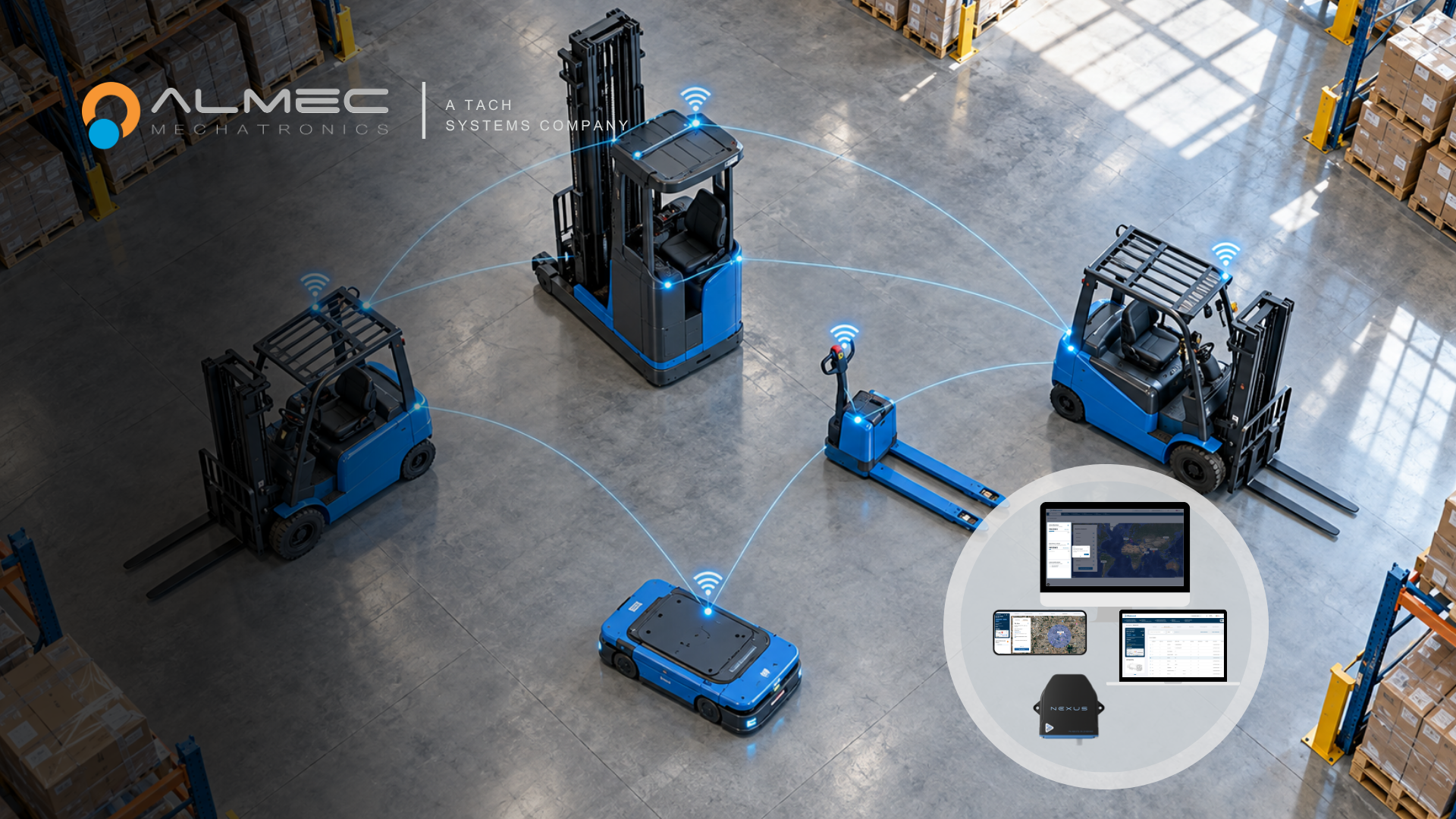
NEXUS is ALMEC’s IoT gateway for machines with a CAN bus network, designed to transmit data to the Diaboard portal. It integrates 4G LTE communication and geolocation.
In an electrified application, the design can include collecting available data from ECUs, controllers and the battery system, selecting which information to make accessible remotely.
Co-design starts with the work the machine needs to do
Through a co-design approach, ALMEC works alongside the manufacturer to analyse functions, signals, interfaces and operating conditions, developing hardware and software as parts of a single architecture. The process can start with customising an existing product or lead to a fully custom solution.
From an electrified function to a complete design
A motor controller, an ECU or an interface can be the starting point. The real value comes from how these elements are integrated.
Are you developing an electrified machine or considering an electric drive for a specific function? Talk to ALMEC: together, we will define motor controllers, ECUs, interfaces and connectivity tailored to your application.
Contact us at info@almec.net or explore our solutions at www.almec.net.