
The automotive sector is undergoing a transformation that involves the entire technological architecture of the vehicle, as well as its propulsion systems.
Electronics, software, connectivity, data management and cybersecurity are playing an increasingly important role in the development of vehicles and machines that can communicate, collect information and support new digital services.
Against this backdrop, the new Innovation Agreements for the automotive supply chain will provide €631.02 million in funding from the Italian Ministry of Enterprises and Made in Italy to support industrial research and experimental development projects.
Research and development for the future of mobility
The initiative aims to develop new products, processes and services, or significantly improve existing solutions with a substantial technological impact.
The goal set out by MIMIT is to support advanced technologies for mobility that is increasingly sustainable, autonomous, connected, intelligent and safe.
This direction shows how the sector’s evolution increasingly depends on the ability to bring different areas of expertise together within a single system.
From components to electronic architecture
Developing new generations of vehicles calls for an increasingly integrated approach.
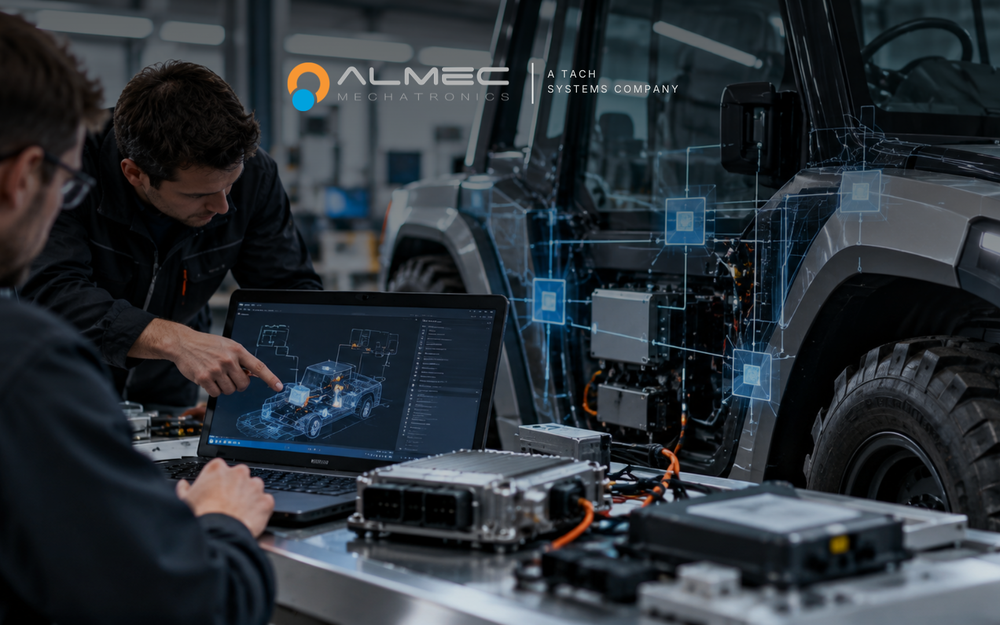
ECUs, HMI systems, sensors, communication networks, gateways, software and IoT platforms cannot be viewed solely as separate elements.
They need to communicate within an architecture that manages vehicle functions, gathers information from different systems, makes it available to the operator and, when needed, transfers it to digital infrastructure and platforms.
Access to this data also enables new capabilities: remote monitoring, diagnostics, fleet management, maintenance, over-the-air (OTA) software updates and new digital services.
At the same time, greater connectivity makes it increasingly important to consider cybersecurity from the earliest stages of design.
The role of electronics in developing new vehicles
In this context, electronics are an integral part of vehicle design.
The task is to coordinate different systems within a shared architecture. Technological development therefore increasingly requires collaboration across electronics, automation, software, communication and data management.
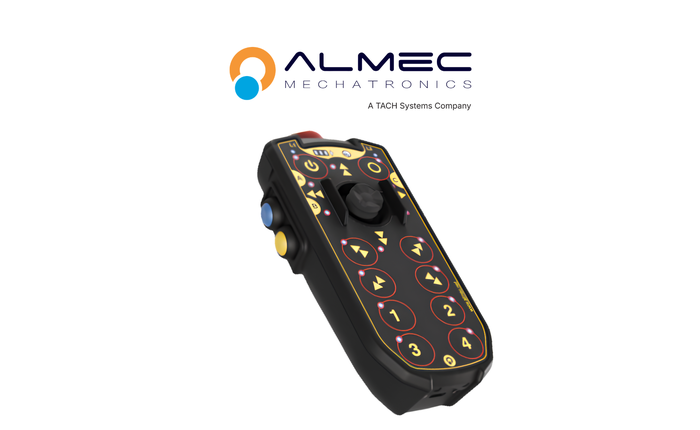
At ALMEC, we work with manufacturers and system integrators to develop electronic systems for industrial machines and special vehicles. Our solutions cover machine control, HMIs, radio controls, DC motor control, CAN communication and IoT connectivity.
We start with the machine’s requirements to develop a system suited to its application and able to evolve over time.
The automotive Innovation Agreements
The new MIMIT initiative provides €631.02 million for industrial research and experimental development projects in the automotive supply chain.
Projects must have eligible costs of between €5 million and €40 million and run for 18 to 36 months.
Funding may cover up to 50% of eligible industrial research costs and 25% of experimental development costs, with possible increases for certain collaborations between companies and research organisations.
In addition, 40% of the available funding is reserved for projects carried out entirely in the regions of Southern Italy.
The application window will open at 10:00 a.m. on 25 November 2026. Applications can be submitted through the online platform.
Innovation means integration
Vehicles are becoming increasingly connected systems, in which control, operator interfaces, communication and data management must be designed as parts of the same architecture.
For manufacturers, the challenge is to introduce new technologies and integrate them reliably and at scale, in line with the real needs of each machine and its application.
Are you developing an innovation project for a machine or vehicle?
Let’s talk. Write to us at info@almec.net.